

Introduction
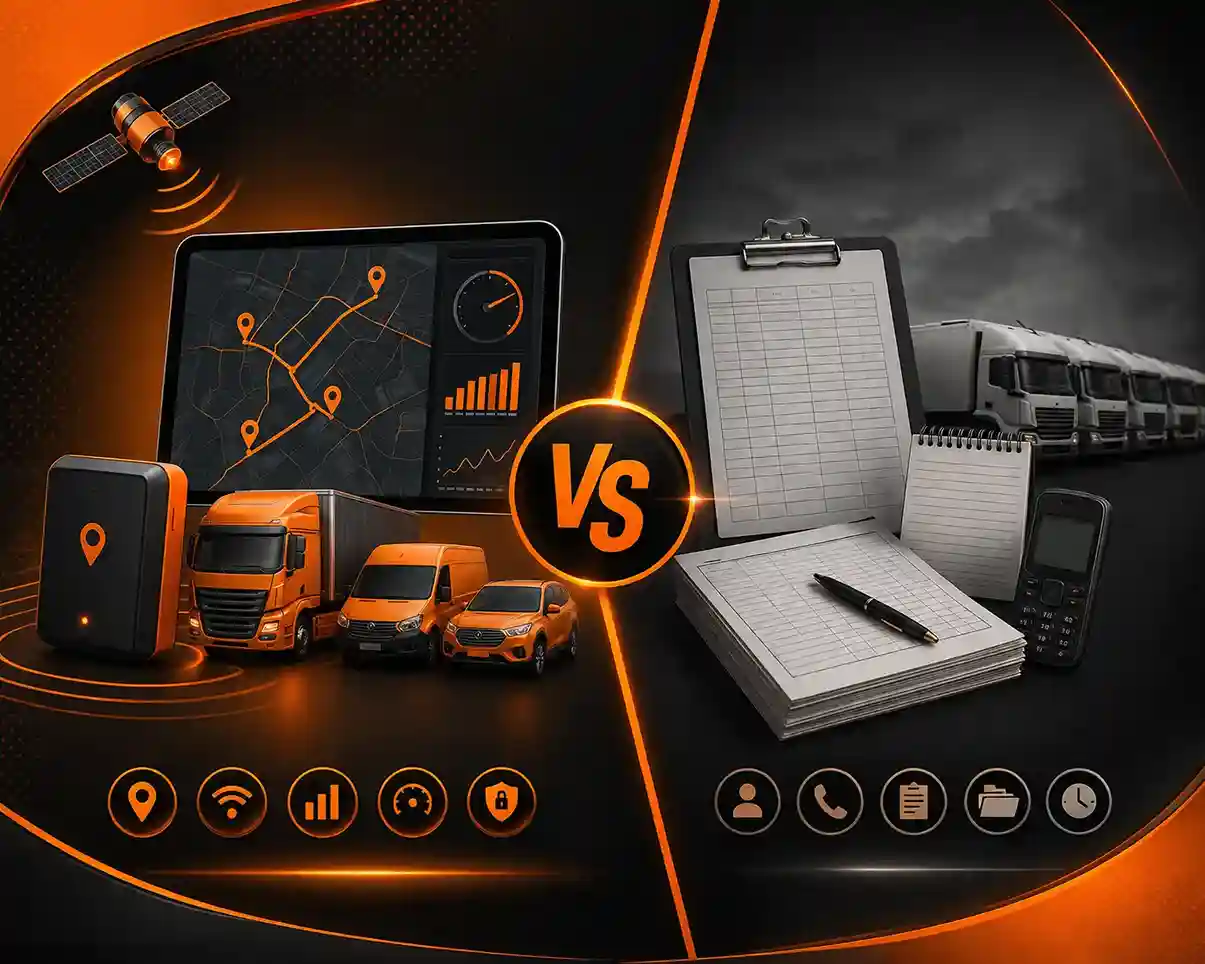
Managing a fleet efficiently is essential for businesses that depend on transportation, whether for deliveries, logistics, field services, or employee travel. For many years, companies relied on traditional fleet monitoring methods such as phone calls, paper logs, and manual reports to track vehicle movements. While these methods helped businesses operate, they often lacked accuracy, real-time updates, and detailed performance insights.
Today, GPS tracking has transformed fleet operations by providing live vehicle visibility, route history, driver behavior analysis, and maintenance reminders. A modern vehicle tracking system enables businesses to monitor every vehicle from a single dashboard, helping improve productivity while reducing operational costs. Compared to traditional monitoring, a fleet management system delivers faster decision-making, better customer service, and improved vehicle utilization.
This article compares GPS tracking vs traditional fleet monitoring and explains why businesses are rapidly adopting smart tracking technology.
Understanding Traditional Fleet Monitoring
Traditional fleet monitoring mainly depends on manual communication between drivers and fleet managers. Drivers usually report their location through phone calls or messages, while travel details are maintained in paper logbooks or spreadsheets. Although this method requires minimal technology, it creates several operational challenges.
Manual Reporting and Limited Visibility
Fleet managers depend on drivers to provide updates, making it difficult to know the exact vehicle location at any moment. Delays in communication can affect delivery schedules and customer satisfaction.
Paper-Based Record Keeping
Fuel expenses, maintenance history, and trip records are often maintained manually. This increases administrative work and makes it harder to analyze vehicle performance over time.
Lack of Operational Insights
Traditional monitoring offers very little information about driver behavior, idle time, route efficiency, or fuel consumption. As a result, managers struggle to identify opportunities for improvement.
What is GPS Tracking?
A GPS tracking solution uses satellite technology to determine the exact location of a vehicle in real time. A vehicle GPS tracking device installed in the vehicle continuously sends location data to an online platform where fleet managers can monitor every trip.
Modern vehicle tracking systems do much more than display vehicle locations. They provide detailed reports on speed, route history, idle time, maintenance schedules, and driver performance. Whether using a GPS tracker for cars, car tracking devices, vehicle GPS tracker, or GPS tracking devices, businesses gain complete visibility over their fleet operations.
GPS Tracking vs Traditional Fleet Monitoring
Real-Time Vehicle Monitoring
Traditional monitoring depends on manual updates, which often causes delays. Managers cannot verify the exact location of vehicles without contacting drivers.
A real time vehicle tracking system provides continuous live location tracking, allowing managers to monitor every vehicle instantly. This improves dispatch planning, reduces delays, and enables faster customer updates.
Benefits
- Instant vehicle visibility
- Faster response to route changes
- Improved customer communication
Route Planning and Fuel Savings
Traditional systems provide limited information about the routes drivers actually follow. This often leads to unnecessary travel and increased fuel expenses.
A GPS based vehicle tracking system records complete trip history and identifies the most efficient routes. Businesses using a fleet tracking system can optimize daily operations while learning how to reduce fleet fuel cost through better route planning and reduced idle time.
Driver Performance Monitoring
Manual monitoring cannot accurately evaluate driver behavior.
A vehicle GPS tracking system combined with a telematics system records speeding, harsh braking, rapid acceleration, excessive idling, and unnecessary stops. Fleet managers can use these reports to improve driving habits, enhance road safety, and reduce maintenance costs.
Vehicle Maintenance Management
Traditional maintenance schedules often depend on manual reminders, increasing the risk of missed servicing.
Modern fleet management software automatically schedules maintenance based on mileage or operating hours. Preventive servicing helps avoid unexpected breakdowns and extends vehicle life.
Advantages of GPS-Based Fleet Management
Businesses are increasingly replacing manual monitoring with a complete fleet management solution because it offers several operational benefits.
Better Fleet Efficiency: A fleet management system provides accurate reports that help managers understand vehicle usage, reduce downtime, and allocate resources more effectively. Businesses searching for how to improve fleet efficiency often see immediate improvements after implementing GPS technology.
Improved Security: A GPS locator for cars helps businesses quickly locate stolen or misplaced vehicles. Many systems also provide alerts if a vehicle leaves a designated operating area.
Data-Driven Decisions: Instead of relying on assumptions, managers receive detailed analytics about fleet performance. These insights help improve planning, reduce operational costs, and increase profitability.
Enhanced Customer Satisfaction: Accurate vehicle tracking enables businesses to provide reliable delivery updates and estimated arrival times, improving customer confidence and service quality.
Modern Fleet Management Beyond GPS Tracking
Today's businesses require more than simple location tracking. A complete vehicle fleet management system combines GPS technology with maintenance scheduling, fuel monitoring, driver safety analysis, and business reporting.
Many organizations are adopting an AI powered fleet management system and an IoT based fleet management system to automate fleet operations and improve decision-making. Businesses with growing fleets also benefit from a cloud-based fleet management SaaS platform, while larger organizations often prefer a white label fleet management software that can be customized to match their brand.
Choosing the Right Fleet Monitoring Solution
Selecting the right solution depends on business size and operational requirements. Small businesses may only require a reliable GPS tracker for vehicle or car tracking systems, while larger organizations often benefit from an advanced fleet monitoring platform with detailed reporting and analytics.
When choosing a solution, businesses should consider tracking accuracy, reporting features, scalability, ease of installation, and user-friendly software.
Conclusion
Traditional fleet monitoring has become less effective in today's fast-moving business environment. Manual reporting, delayed communication, and paper-based records limit operational efficiency and make fleet management more challenging.
In comparison, GPS tracking provides real-time visibility, improved driver monitoring, optimized routes, preventive maintenance, and better fuel management. Whether using a vehicle tracking system, GPS tracking system for vehicles, or a complete fleet management software, businesses gain greater control over daily operations while reducing costs and improving customer service.
As technology continues to evolve, investing in a modern smart fleet management system is no longer just an upgrade—it is a practical business strategy that supports productivity, operational efficiency, and long-term growth.