

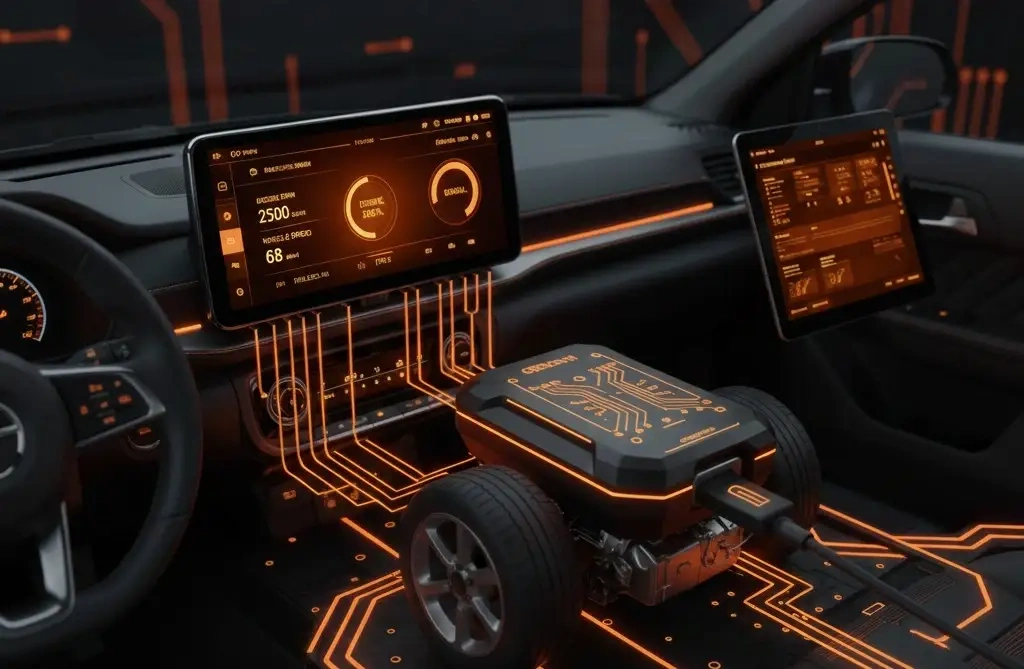
Modern vehicles are becoming more intelligent and more connected every single year. Whether it's a commercial fleet, delivery vehicles, buses, or private cars, businesses want deeper insights into what is happening inside their vehicles — not just location, but real engine performance and real-time diagnostics. This is exactly where CANbus–OBD integration plays a major role.
CANbus (Controller Area Network) is the internal communication network of a vehicle. It connects all major electronic control units (ECUs) such as the engine, fuel system, brakes, and transmission. OBD (On-Board Diagnostics) acts as the access point that allows external devices to read this data. When both systems work together, fleet operators gain accurate and powerful insights into vehicle health and performance, especially when using a Vehicle CAN BUS OBD tracking system.
Understanding CANbus–OBD Integration
Inside every modern vehicle, dozens of sensors continuously collect information. CANbus gathers this internal data—such as fuel consumption, temperature, RPM, acceleration, and engine error codes—and sends it through the OBD-II port.
A CAN bus–OBD tracking device connects to this port and reads all the technical information. This data is then transmitted through IoT connectivity to a cloud dashboard, allowing fleet managers to monitor vehicles from anywhere, anytime.
This type of integration is extremely valuable because it offers complete visibility into what is happening under the hood, not just outside the vehicle. Fleet owners don't need to wait for breakdowns or depend on driver feedback. Instead, they get accurate, automated insights directly from the vehicle's brain.
Why Is This Integration So Important for Fleets?
Most traditional GPS trackers provide only location details. They cannot reveal engine issues, fuel wastage, overheating, or unauthorised driving habits. CANbus–OBD integration solves all these challenges by giving a deep, transparent look at the vehicle's internal operations.
Businesses can now monitor:
- Engine performance
- Real-time fuel consumption
- Battery health
- Brake system status
- Engine load
- Vehicle speed & RPM
- Diagnostic Trouble Codes (DTCs)
- Driver behaviour patterns
This helps prevent breakdowns, reduce operational expenses, and increase fleet productivity.
In many fleets, adopting a Fleet CAN BUS OBD tracking solution has reduced both fuel costs and mechanical failures by providing timely alerts and real-time engine insights.
How CANbus–OBD Integration Works
The process is simple and fully automated:
✔ 1. Data Collection
The vehicle's CAN bus collects sensor data from all internal components.
✔ 2. OBD-II Reading
A small plug-and-play OBD tracker connects to the diagnostic port and reads engine information.
✔ 3. Transmission to Cloud
Using IoT and GPS connectivity, data is sent to a cloud dashboard where managers access it instantly.
✔ 4. Analysis & Alerts
The system analyses patterns and sends alerts for overheating, low battery, fuel loss, harsh driving, and more.
This automation gives fleet operators complete control without manual inspection.
In fact, many companies today prefer a CAN BUS OBD tracker with GPS because it combines GPS tracking and engine diagnostics into one smart device.
Benefits of CANbus–OBD Integration
✔ Improved Fleet Safety
The system identifies dangerous driving habits like overspeeding, harsh braking, or sudden acceleration.
✔ Lower Fuel Costs
Real-time fuel consumption reports help managers identify wastage, idling, and inefficient routes.
✔ Early Fault Detection
Engine errors, low oil pressure, battery failure, or overheating are detected early through diagnostic alerts.
✔ Reduced Breakdown Costs
Knowing issues in advance helps schedule timely maintenance and avoid expensive emergency repairs.
✔ Higher Vehicle Life
Monitoring engine load, coolant levels, and RPM increases long-term performance and vehicle lifespan.
✔ Greater Transparency
Fleet misuse, unauthorised trips, or tampering can be detected instantly.
A robust Real-time CAN BUS data tracking system can save companies thousands of rupees annually by providing accurate insights without guesswork.
Industries That Benefit from CANbus–OBD
CANbus–OBD is useful for almost every industry that operates vehicles:
- Logistics & Transport
- School & College Buses
- Taxi & Cab Fleets
- Construction Vehicles
- Government & Municipal Fleets
- Delivery & Courier Services
- Corporate Vehicle Fleets
- Emergency Vehicles like Ambulances
From monitoring heavy trucks to ensuring passenger safety in buses, this technology plays a major role in improving fleet efficiency.
Additionally, advanced features such as CAN BUS OBD with fault code monitoring help technicians diagnose mechanical problems faster, reducing vehicle downtime.
Key Features You Get with CANbus–OBD Systems
Here are the most useful features:
- Real-time engine diagnostics
- Fuel consumption analytics
- GPS location tracking
- Driver behaviour monitoring
- Fault code alerts
- Maintenance reminders
- Engine performance monitoring
- Route optimization
- Idle time tracking
- Strong anti-tamper protection
With insights directly from the engine, businesses get true data accuracy and unmatched operational control.
Conclusion
CANbus–OBD integration is one of the smartest and most efficient technologies used in modern vehicle management. It gives fleets complete access to internal vehicle data, transforming the way they monitor, maintain, and optimise their operations. With real-time engine insights, predictive maintenance, fuel analytics, and fault detection, businesses can reduce operational costs and maximise performance. Choosing a powerful Vehicle CAN BUS OBD tracking system ensures safer, smarter, and more efficient fleet management for the long run.